Rafters navigating white water rapids in the Himalayas with Globesome
← Globesome Journal

Beginner Guide · August 2026

WHITE WATER RAFTING
GRADES EXPLAINED.

Planning your first rafting adventure but unsure which river grade you should choose? Understanding difficulty before you get into a raft makes the experience safer and better suited to your comfort level.

01 - Overview

What Do White Water Rafting Grades Mean?

The internationally used river classification system groups rapids according to obstacles, technical difficulty and the skills required to navigate them. Understanding white water rafting grades helps beginners know what to expect rather than choosing a trip based only on how adventurous it sounds.

The commonly used International Scale of River Difficulty ranges from Class I to Class VI. However, a river's classification is not a permanent guarantee of conditions. Water levels, weather, debris and other environmental factors can change how difficult a rapid becomes, which is why local guides and operators should always be consulted before a trip.

Beginners should generally start with lower-grade rapids and choose a trip that matches their swimming ability, physical fitness and comfort in moving water. If you are planning your first descent on the Ganga, our Rishikesh rafting guide for first-timers explains stretches, gear and booking advice in detail.
02 - The Scale

Rafting Difficulty Levels, Class by Class

01

Grade 1

Easy and Beginner-Friendly Rapids

Class I represents moving water with small waves and relatively few obstacles. These sections generally require basic manoeuvring and are suitable for beginners under appropriate supervision. For someone trying rafting for the first time, a Class I route can provide an introduction to paddling, river movement and basic safety procedures without the intensity associated with more technical rapids.

02

Grade 2

Simple Rapids With Some Excitement

Class II involves straightforward rapids with small waves and some obstacles. Basic paddling skills and awareness are required, but the route is generally manageable for beginners when accompanied by trained guides. This grade offers more excitement while still being accessible to people new to moving water.

03

Grade 3

Moderate Rapids for Growing Confidence

Class 3 rafting involves moderate rapids with larger and more irregular waves, stronger currents and more noticeable obstacles. Routes may require precise manoeuvring and coordinated paddling. Beginners may be able to participate, but suitability depends on the specific river, operator requirements and conditions.

04

Grade 4

Challenging Rapids for Experienced Rafters

Class 4 rafting involves more powerful and technical rapids, with stronger currents, larger waves and potentially complex obstacles. Routes may require accurate boat handling, teamwork and quick responses. This level is generally intended for experienced participants and should not be selected casually.

05

Grade 5 & 6

Expert-Only Whitewater

Class V represents extremely challenging rapids requiring highly advanced skills, detailed preparation and experienced teams. Class VI represents extreme difficulty and exceptional hazards, considered very difficult and potentially dangerous even for highly skilled paddlers. Commercial beginner rafting trips are generally not designed around these conditions.

03 - Choosing

How Should Beginners Choose a Rafting Difficulty Level?

When comparing rafting difficulty levels, beginners should consider more than the number attached to a rapid. Ask the operator about the route, current water levels, expected weather, guide qualifications, minimum age and previous experience requirements.

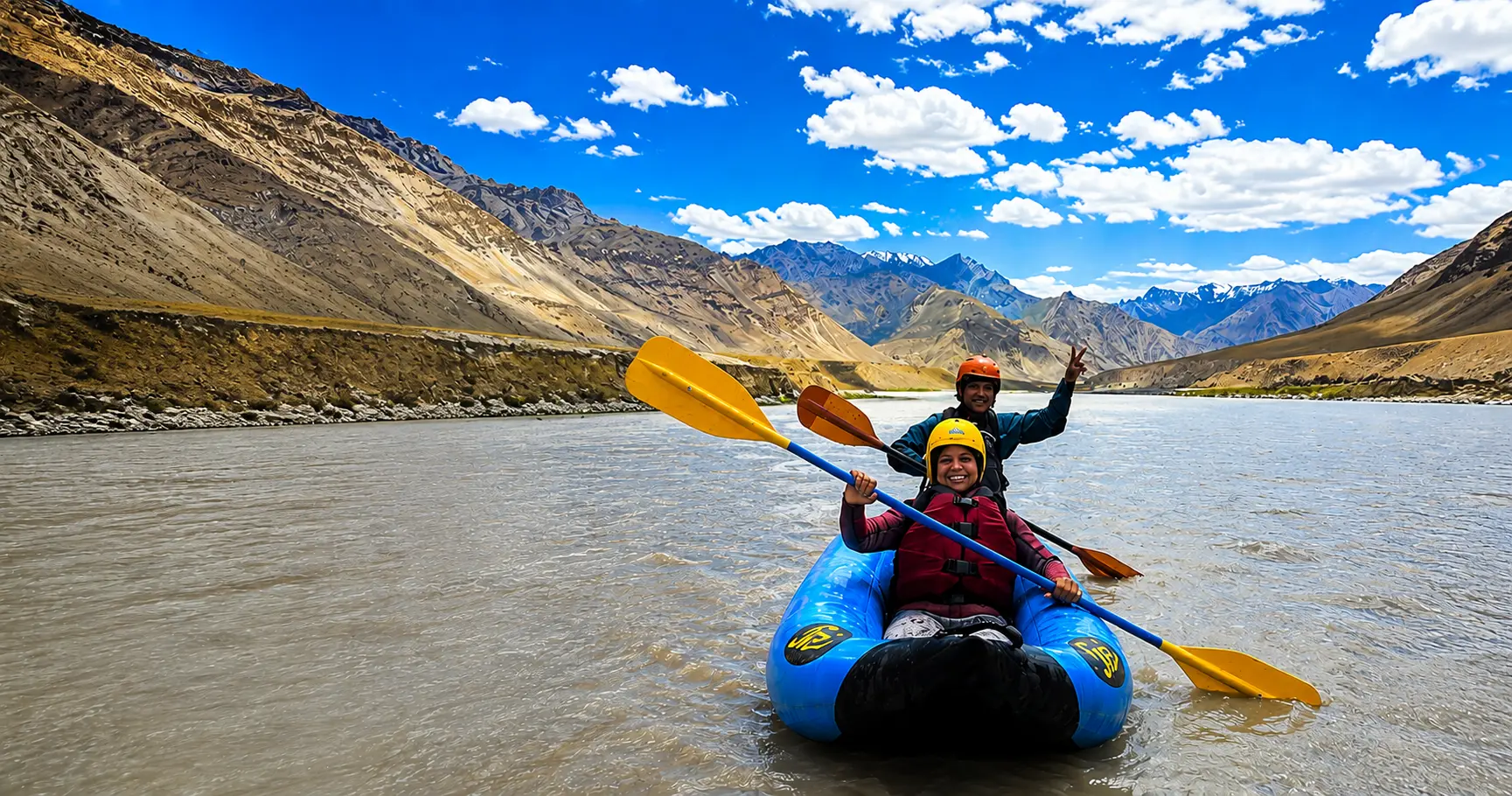
If you are unsure, choosing an easier route is sensible. A lower-grade trip can help you learn basic paddling and river-safety techniques before progressing to more challenging adventures such as our 100 km Rishikesh expedition or the expedition-grade 152 km Zanskar descent in Ladakh.

Timing matters as much as grade: the same stretch behaves differently across the season. Our seasonal guide to rafting in Rishikesh breaks down month-by-month flows and weather.

04 - Safety

Why River Conditions Matter

The same stretch of river can behave differently depending on water levels and weather. Increased flow may make rapids faster and more powerful, while fallen trees, rocks or other debris can create additional hazards. Reputable operators monitor conditions and may modify routes or postpone trips when conditions are unsuitable.

Before setting off, listen carefully to your guide's safety briefing and learn basic paddle commands. Wear the required personal flotation device and other appropriate safety equipment, and follow the operator's instructions throughout the trip. Avoid assuming that a lower grade means there is no risk - moving water can be unpredictable, so preparation, qualified supervision and appropriate equipment remain essential at every level.

05 - FAQs

Common Questions About Rafting Grades

Which rafting grade is best for complete beginners?+

Class I and Class II rapids are generally the most approachable options for beginners, although suitability depends on the river and conditions. A qualified rafting operator can recommend an appropriate route based on your experience, age, fitness, swimming ability and the conditions expected on the day.

Is Class 3 rafting suitable for first-time rafters?+

Class 3 rafting may be suitable for some beginners when accompanied by qualified guides and operating under appropriate conditions. However, it involves stronger waves, currents and more technical manoeuvring than lower grades. Beginners should always follow the operator's experience requirements and safety recommendations before booking.

How difficult is Class 4 rafting?+

Class 4 rafting involves powerful, technical rapids that require greater boat control, teamwork and quick decision-making. It is generally intended for experienced rafters rather than first-timers. The actual difficulty can also change with water levels, weather, river features and other local conditions during a particular trip.

Can river grades change with water levels?+

Yes. River conditions can significantly affect how a rapid behaves. Higher or lower water levels may alter current speed, wave size, obstacles and routes through rapids. Therefore, rafting difficulty levels should always be considered alongside current conditions and advice from experienced local guides.

What safety equipment is required for white water rafting?+

Participants typically need a properly fitted personal flotation device and appropriate clothing or protective equipment suited to the river and weather. Operators may provide helmets, paddles and other equipment. Before launching, participants should receive a safety briefing covering paddling commands, emergency procedures and river-specific hazards.

Final Thoughts

Understanding white water rafting grades makes it easier to choose an adventure that matches your experience and comfort level. Class I and II generally provide gentler introductions, while Class III introduces stronger and more technical rapids. Class IV and above require considerably greater experience and preparation. If you are planning your first rafting adventure, Globesome can help you explore suitable experiences while considering the route, conditions and level of challenge involved.

Continue Reading

Not sure of your grade?

LET OUR GUIDES MATCH YOU TO THE RIGHT RIVER.

Message us on WhatsApp and we'll recommend a stretch based on your experience, fitness and travel dates.

Chat on WhatsApp