
100 KM
Rishikesh expedition
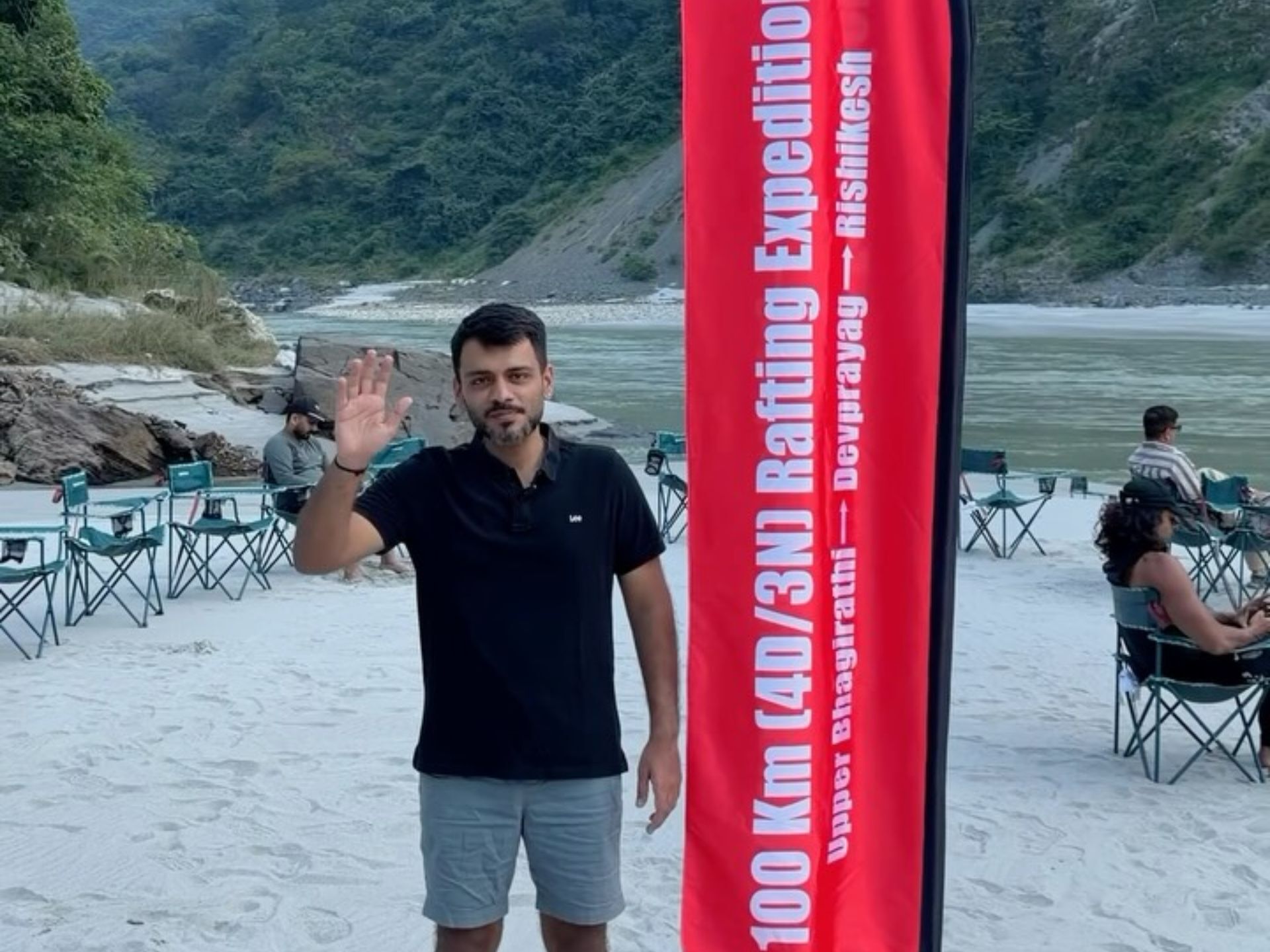
The 100 km Rishikesh expedition runs from the Upper Bhagirathi down to Rishikesh over four days, through Grade I to V rapids.
Explore the 100 km Expedition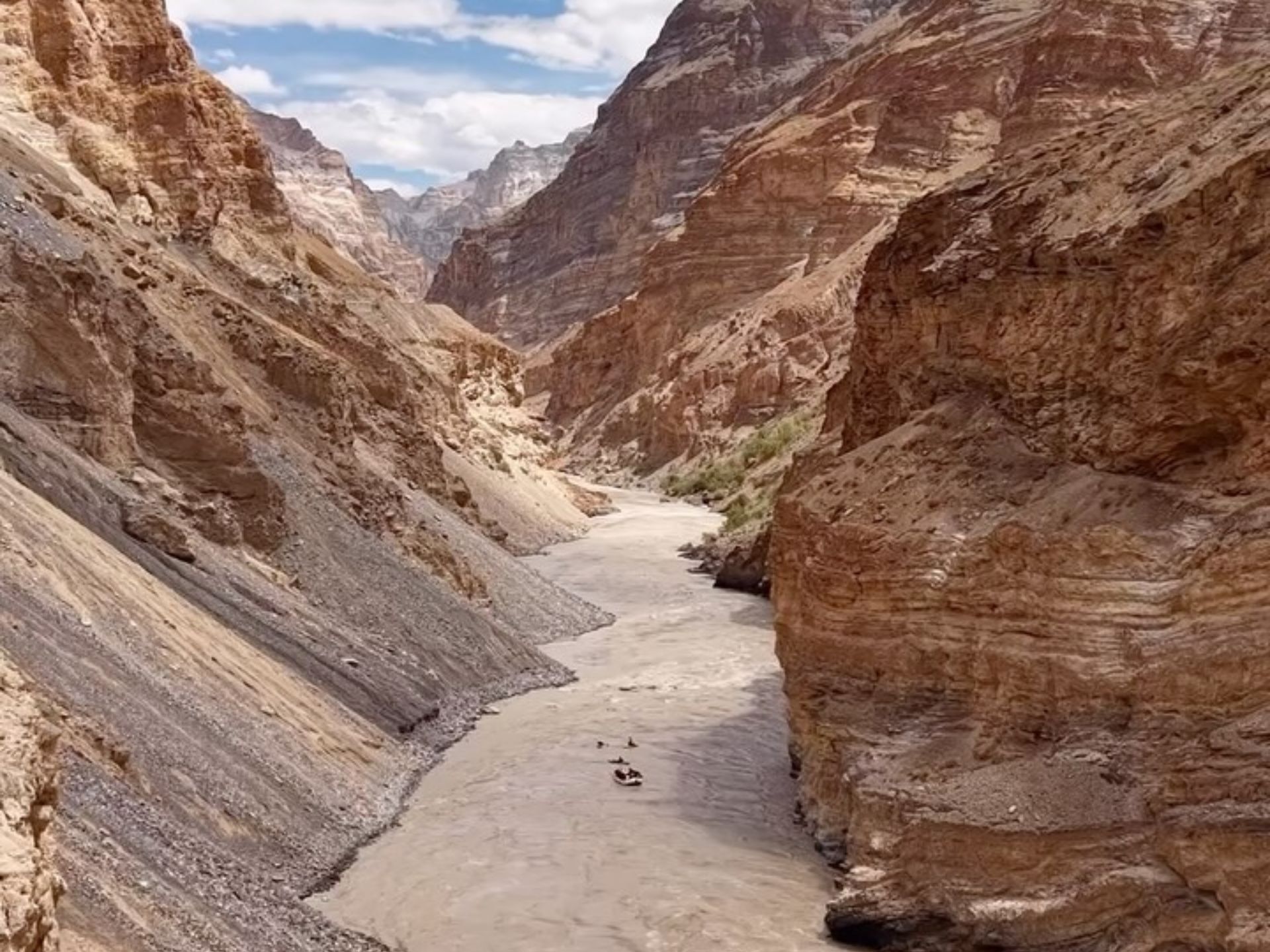
Rafting gear · Accessories · Safety equipment
Most people book a rafting trip thinking about the rapids. Very few think about the kit until someone hands them a helmet on the riverbank.
Rafting at a glance
Yet river rafting equipment decides how a bad moment on the water plays out. A swimmer whose life jacket is buckled tight floats high and breathes easily. A loose one slips right off. Here's what each piece does, and what to check before you launch.
Raft & paddle
Self-bailing boat and a controlled T-grip
Life jacket
Snug flotation with every strap tightened
Helmet
Level fit and a secure chin strap
Rescue kit
Throw bags, flip lines and first aid
Personal accessories
Dry bags, straps and secure bottles
Cold-river layers
Wetsuit, splash jacket and thermal clothing
The boat and the blade
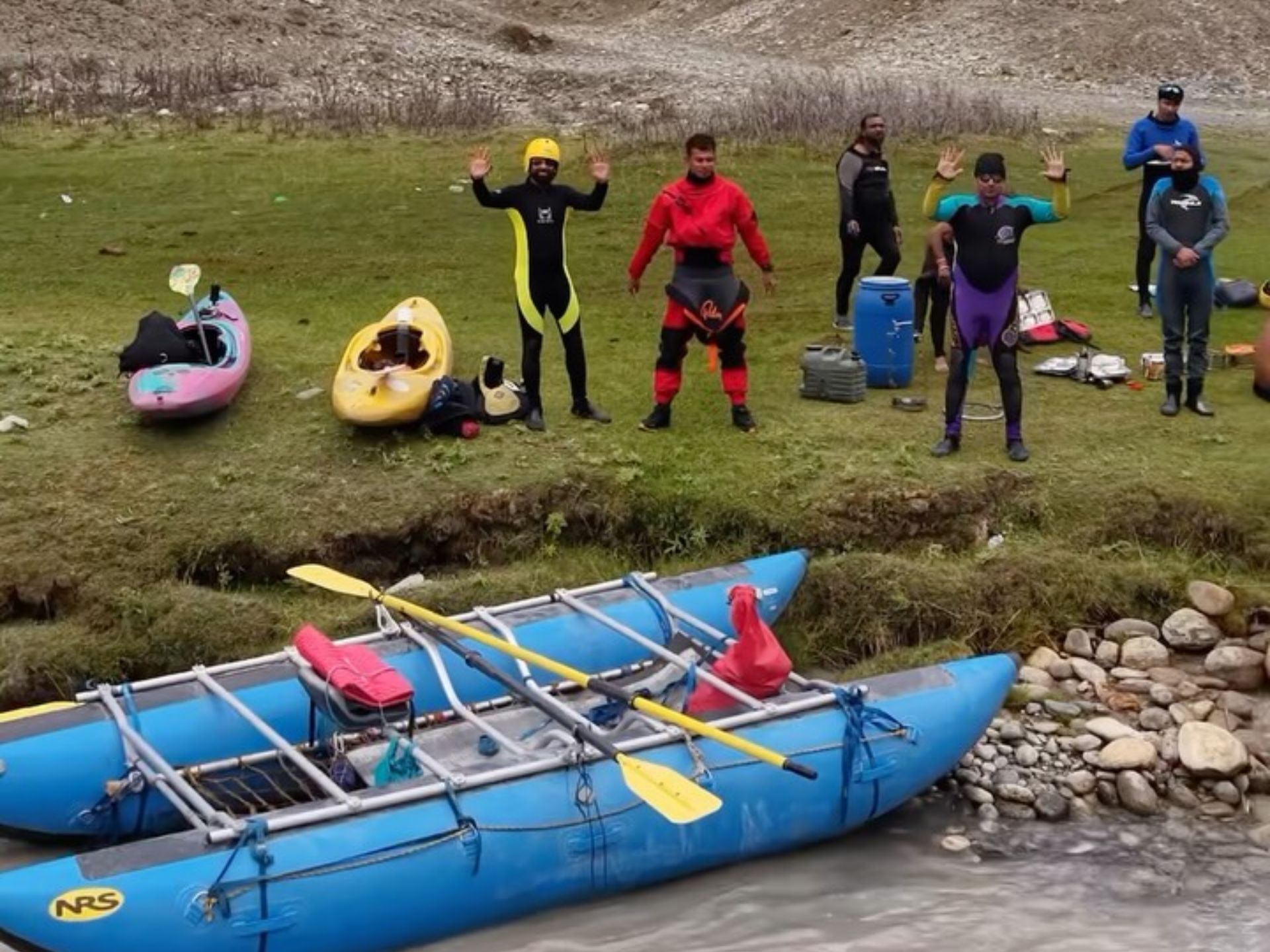
Start with the raft itself. Modern whitewater rafts are self-bailing, so water crashing over the sides drains out through the floor instead of pooling inside. Separate air chambers mean a single puncture won't sink it.
Keep one hand on your paddle's T-grip at all times. Let it swing free and it becomes a blunt object at face height, which is how plenty of chipped teeth happen on rafts.
On a multi-day expedition, the river rafting equipment list grows. Guides carry pumps to adjust tube pressure as the day warms up, repair kits for field patches, and frames that hold camp supplies, food and water downriver.
Personal safety equipment
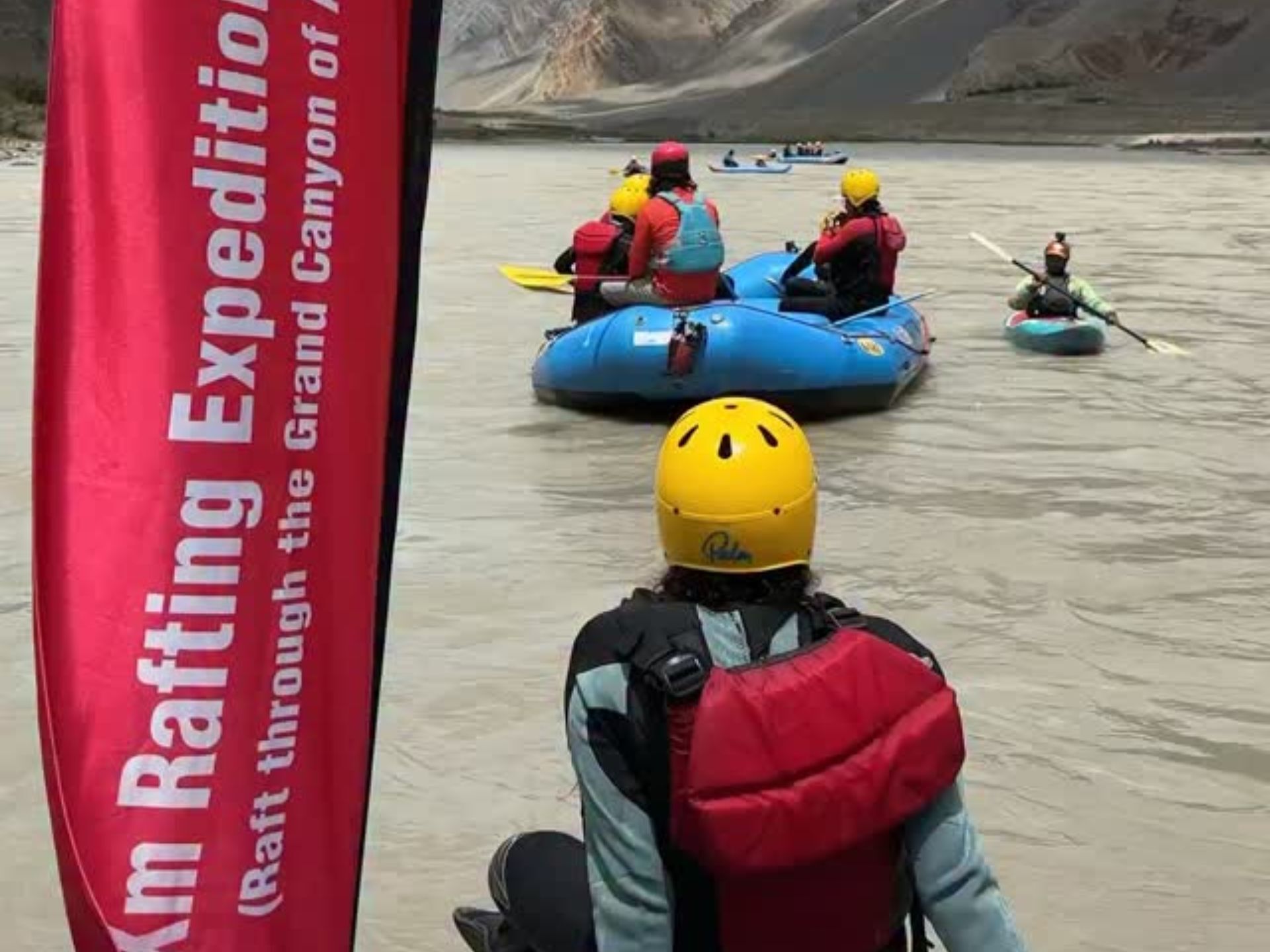
A personal flotation device is non-negotiable on every stretch. Whitewater jackets carry more buoyancy than a standard boating vest, because churned, aerated water is harder to float in than calm water. After you buckle up, your guide should pull the shoulders upwards. If the jacket rides past your ears, it's too loose.
A good helmet sits level, just above your eyebrows, and doesn't shift when you shake your head. Clip the chin strap so roughly one finger fits underneath.
Flip-flops vanish in the first rapid. River shoes or strapped sandals protect your feet when you scramble over boulders or swim. Cold rivers call for a wetsuit or splash jacket, and the Zanskar runs on glacial melt, so ask your operator which thermal layers come included.
Every piece of personal safety equipment works only when it fits you, not the last person who wore it. Speak up if anything feels loose.
Rescue systems
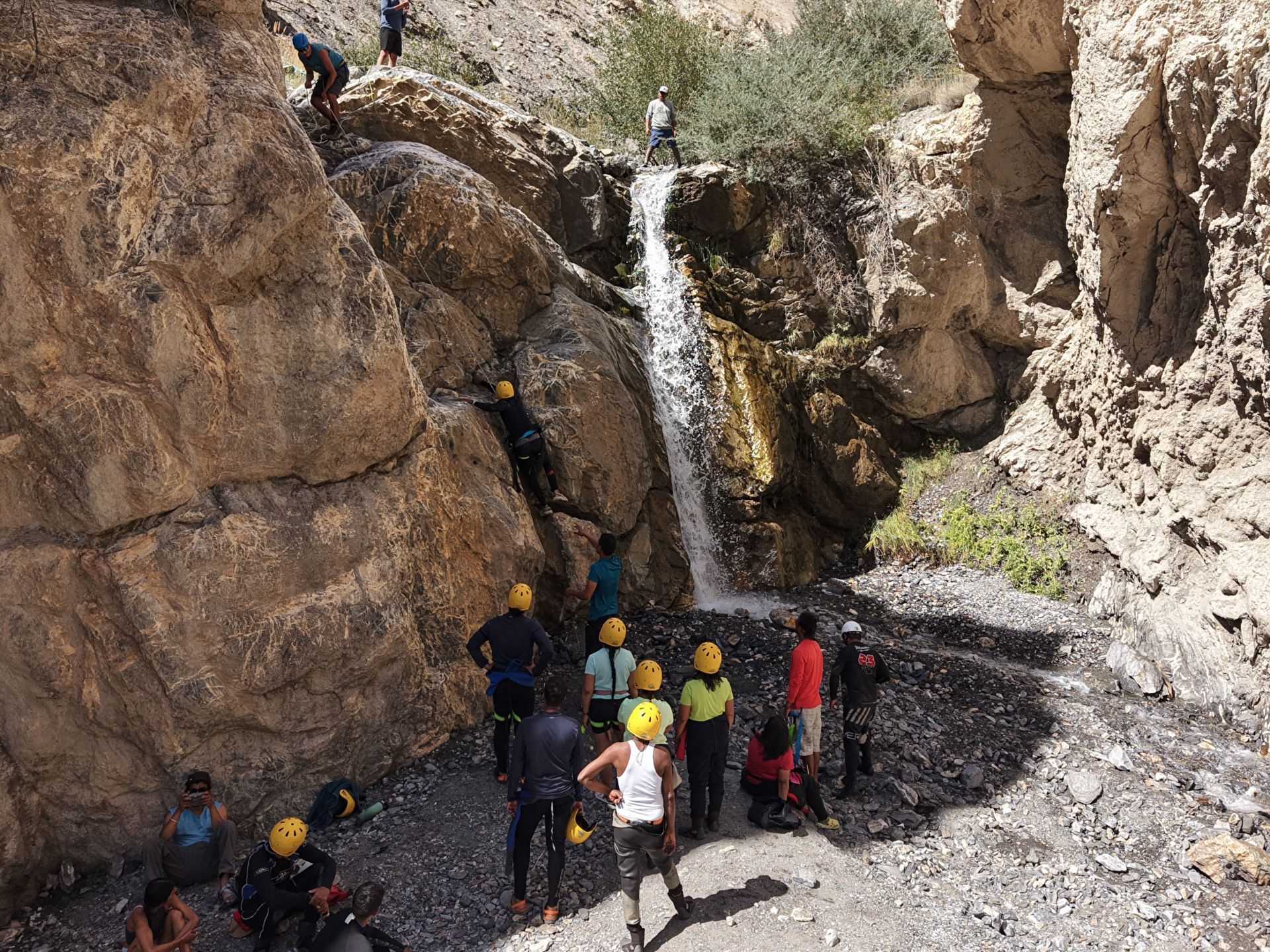
Look closely at your guide's jacket and you'll spot a knife, a whistle and a coiled throw bag. The bag holds rope thrown downstream to a swimmer. Flip lines help right a capsized raft. Carabiners and pulleys free a boat pinned against a rock.
Safety kayakers paddle alongside too, reaching a swimmer far faster than a loaded raft can turn.
This is the rafting gear most guests never notice. That's the point.
Rafting accessories
A week on the river needs more than sunscreen. Dry bags keep spare clothes and sleeping kit dry. A sunglasses strap saves your eyewear in the first big splash, and a clip-on water bottle stays put when the raft bucks.
These rafting accessories rarely make the brochure, yet you'll be grateful for them by the third evening at camp.
Why book with Globesome
Globesome has run river expeditions since 1995, and both flagship trips push kit harder than a half-day float.
On stretches this remote, help isn't a short drive away. The team carries what it needs: inspected boats, rescue systems, first aid and camp supplies. Guides hold International Rafting Federation certification, safety kayakers join every trip, and each journey opens with a detailed briefing on how every piece of kit works.
100 KM
The 100 km Rishikesh expedition runs from the Upper Bhagirathi down to Rishikesh over four days, through Grade I to V rapids.
Explore the 100 km Expedition152 KM
The 152 km Zanskar expedition in Ladakh covers seven days of Grade I to IV water through the gorge known as the Grand Canyon of Asia.
Explore the 152 km ExpeditionOn the river
Enquire now
FAQ
Reputable operators supply the raft, paddles, life jackets, helmets and group rescue kit such as throw bags and first aid. You usually bring your own clothing, footwear, sunscreen and personal medication. Confirm the full list with your operator before booking, especially for remote routes.
Good river rafting equipment won't make the rapids smaller. It makes them something you can enjoy rather than endure. Check the fit, listen at the briefing, and trust the people who rig the boats.
If the 100 km Rishikesh run or the 152 km Zanskar expedition is on your list, explore Globesome's expeditions and start planning your season.