Safety Guide · November 2026
WHAT HAPPENS IF YOUR RAFT FLIPS
DURING RIVER RAFTING IN RISHIKESH?
Almost everyone who books a trip on the Ganga asks the same thing: what if we tip over? Here's exactly what happens, and what your guide trains for.
Learn the Safety Steps01 - The Reality
How Often Do Rafts Actually Flip?
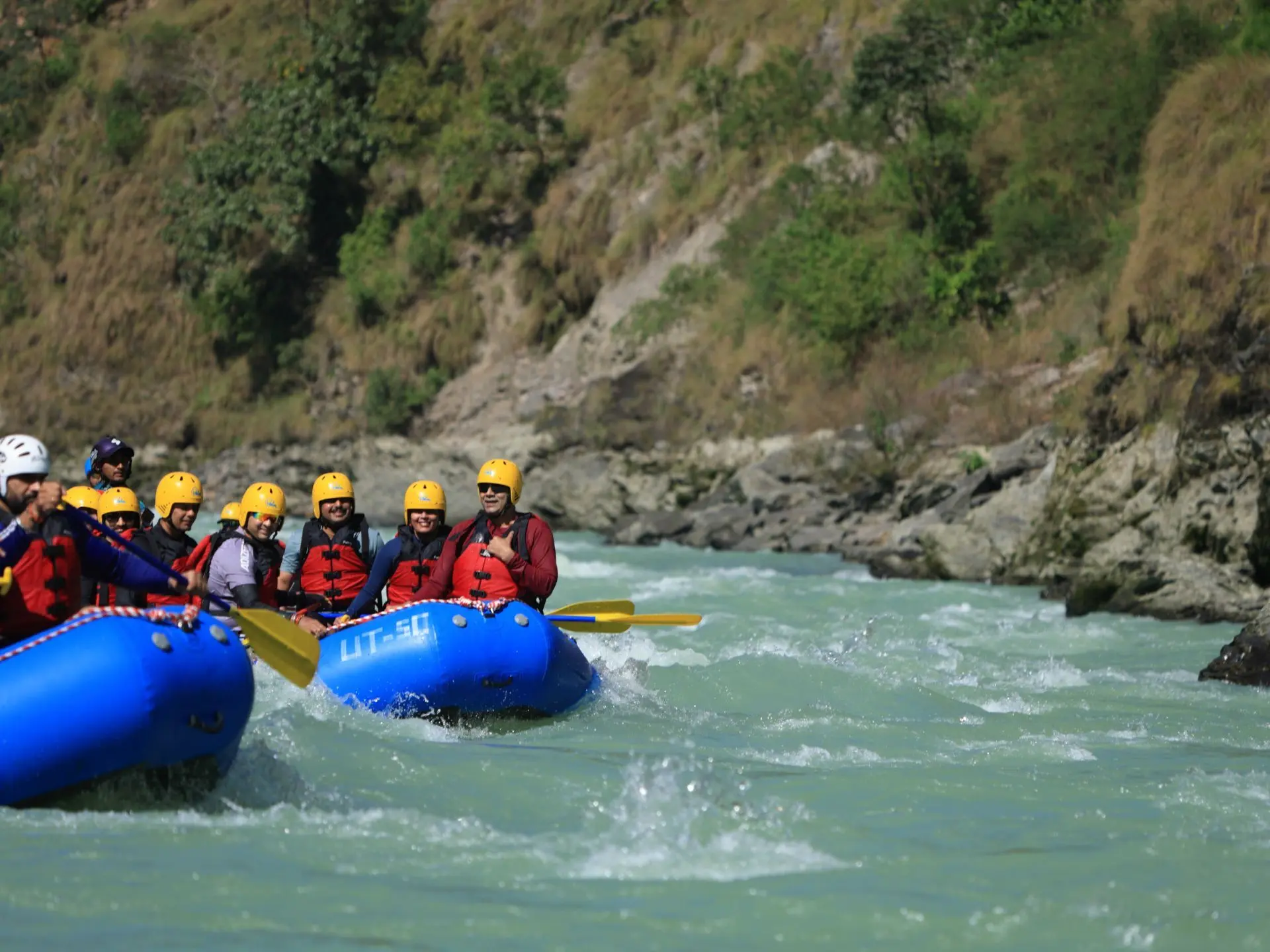
Raft flipping during river rafting doesn't happen often on a well-run trip, but it can, usually on bigger rapids like Roller Coaster and Golf Course on the Shivpuri stretch.
The good news? Your guide trains for this all the time, and you'll know what to do before you even get wet.
02 - The Causes
Why Rafts Flip on the Ganga
Most flips have simple causes. The raft hits a big wave side-on, drops into a hole, or the crew stops paddling at the wrong moment. Follow your guide's commands fast and you cut the risk of raft flipping during river rafting by a long way.
03 - The Moment
What Happens When a Rafting Boat Flips?
So, what happens when a rafting boat flips? It all takes a second or two. You hit cold water, panic for a moment, then your life jacket pops you back up.
Keep a firm hold of your paddle by the T-grip. A loose paddle can hit you or the person next to you.
If You Come Up Under the Raft
There's an air pocket under the boat, so you can breathe. Put a hand on the raft floor and move hand over hand to the edge.
04 - In the Water
River Rafting Flip Safety: What to Do in the Water
Good river rafting flip safety comes down to staying calm and getting into the right position:
- Lie on your back with your feet up and pointing downstream
- Push off rocks with your feet, not your hands
- Never stand up in fast water, as your foot can get trapped
- Swim towards the raft or bank only when your guide tells you to
Your briefing covers what happens when a rafting boat flips, so listen closely, even if you've rafted before. Our river rafting safety tips guide walks through the full briefing, equipment and self-rescue habits.
05 - The Rescue
The Rafting Rescue Procedure Guides Follow
Every trained crew works to a clear rafting rescue procedure. The guide checks that everyone has surfaced, then goes after the people closest to danger.
Safety Kayakers and Throw Bags
A safety kayaker often reaches swimmers first. Grab the back of the kayak and they'll tow you to calmer water. From the bank, a guide may throw a rope bag. Hold the rope, roll onto your back and let them pull you in.
Getting Back Into the Raft
Your guide flips the raft back with a line clipped to its side, then hauls you in by your life jacket's shoulder straps.
06 - The Rules
The Rules Behind Every White Water Rafting Emergency Procedure
Uttarakhand backs up each white water rafting emergency procedure with clear rules. Every licensed river guide must be able to swim and hold a valid first aid certificate, according to the state's rafting licence guidelines. The state has also pushed for first aid and CPR training for guides.
Under the 2026 amendment rules, a single raft must have at least one safety kayak with it. So ask your operator about their licence and their white water rafting emergency procedure before you book.
07 - Be Ready
How to Get Ready Before You Hit the Rapids
- Make sure your life jacket fits snugly and your helmet is buckled
- Leave phones, loose glasses and jewellery behind
- Pick a stretch that suits your fitness and experience
- Ask how the crew handles river rafting flip safety on that stretch
Not sure what to bring or wear on the day? Our what to wear for river rafting guide covers quick-dry clothing, footwear and seasonal layers.
08 - Final Word
Conclusion
Raft flipping during river rafting sounds scary, but guides plan for it every day. Stay calm, float on your back and listen to your crew. Planning a Rishikesh adventure? Globesome can help you find a safe, well-guided trip on the Ganga.
09 - Common Questions
Frequently Asked Questions
01Can I go rafting in Rishikesh if I can't swim?
Yes, you can. You don't need to swim because you'll wear a life jacket and a helmet the whole time. Your guide will teach you how to float and what to do if you fall out, so beginners feel ready.
02How common is raft flipping during river rafting in Rishikesh?
Raft flipping during river rafting is fairly rare on the beginner and intermediate stretches, and more likely on bigger rapids. Skilled guides read the water well and give clear commands, which keeps flips to a minimum on most trips you'll join.
03What should I do if I fall out but the raft doesn't flip?
Float on your back with your feet pointing downstream and keep hold of your paddle. Your crew will reach out a paddle handle for you to grab, then pull you back in by the shoulder straps of your life jacket.
04Is there a minimum age for rafting in Rishikesh?
Yes. The minimum age is usually 14 years for white water stretches in Uttarakhand. Some operators offer calmer floats for younger children, so always check with your operator before booking, as rules can differ between stretches and seasons.
05What does a rafting rescue procedure involve?
A rafting rescue procedure starts with the guide counting heads. Safety kayakers then reach the swimmers, guides throw rope bags if needed, and the crew flips the raft back over. Finally, everyone gets pulled safely back on board.
Ready for the River?
Book a Safe, Well-Guided Rishikesh Rafting Trip.
Tell us which stretch you have in mind, and our team will confirm availability, timing and everything you need for the day.